Cleaner.
Office plants on hydroculture
Strong plants on baked clay pebbles instead of soil. Water once a month, no shrinkage and no pests.
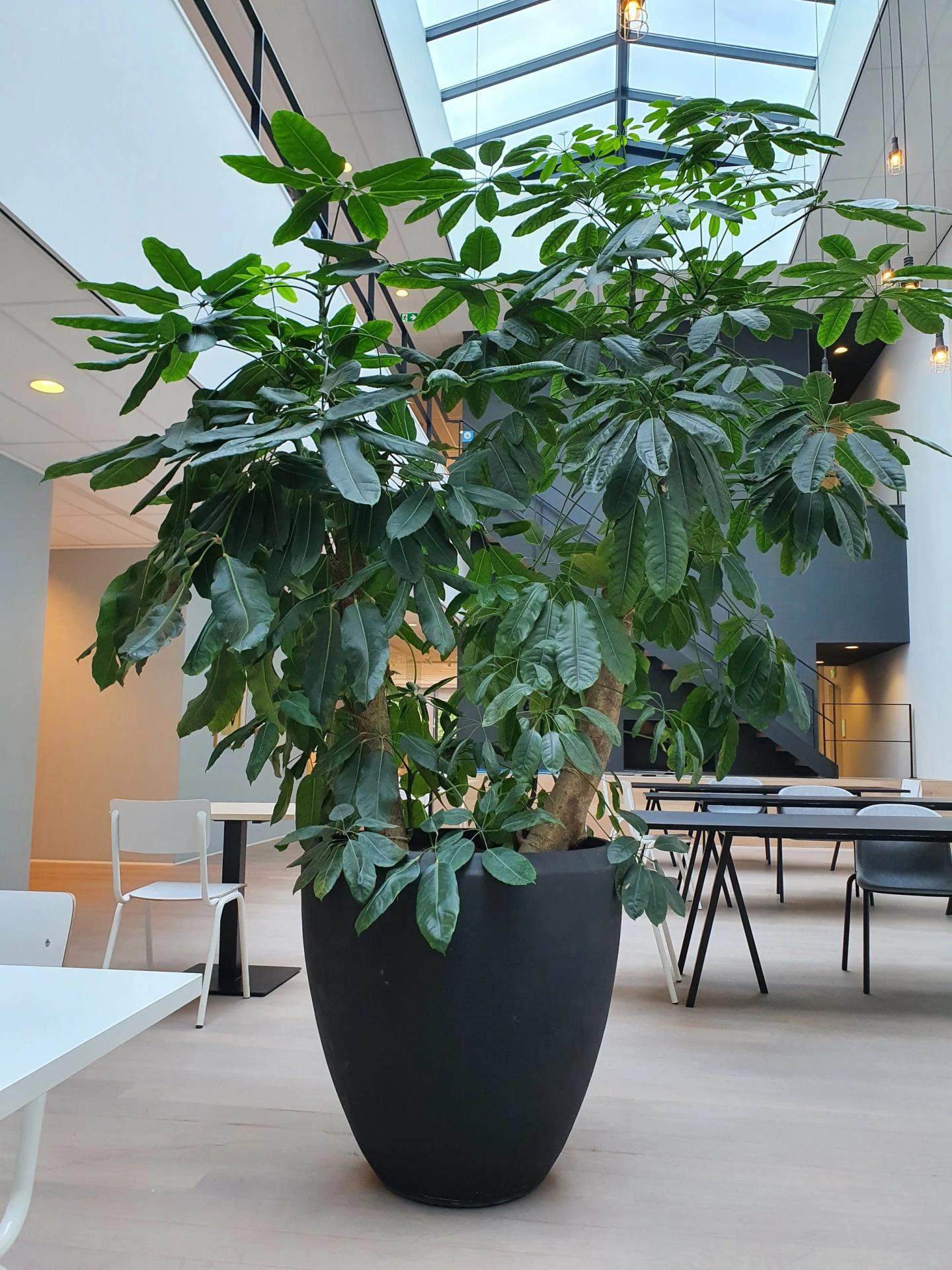
What hydroculture does
Less care, stronger plants.
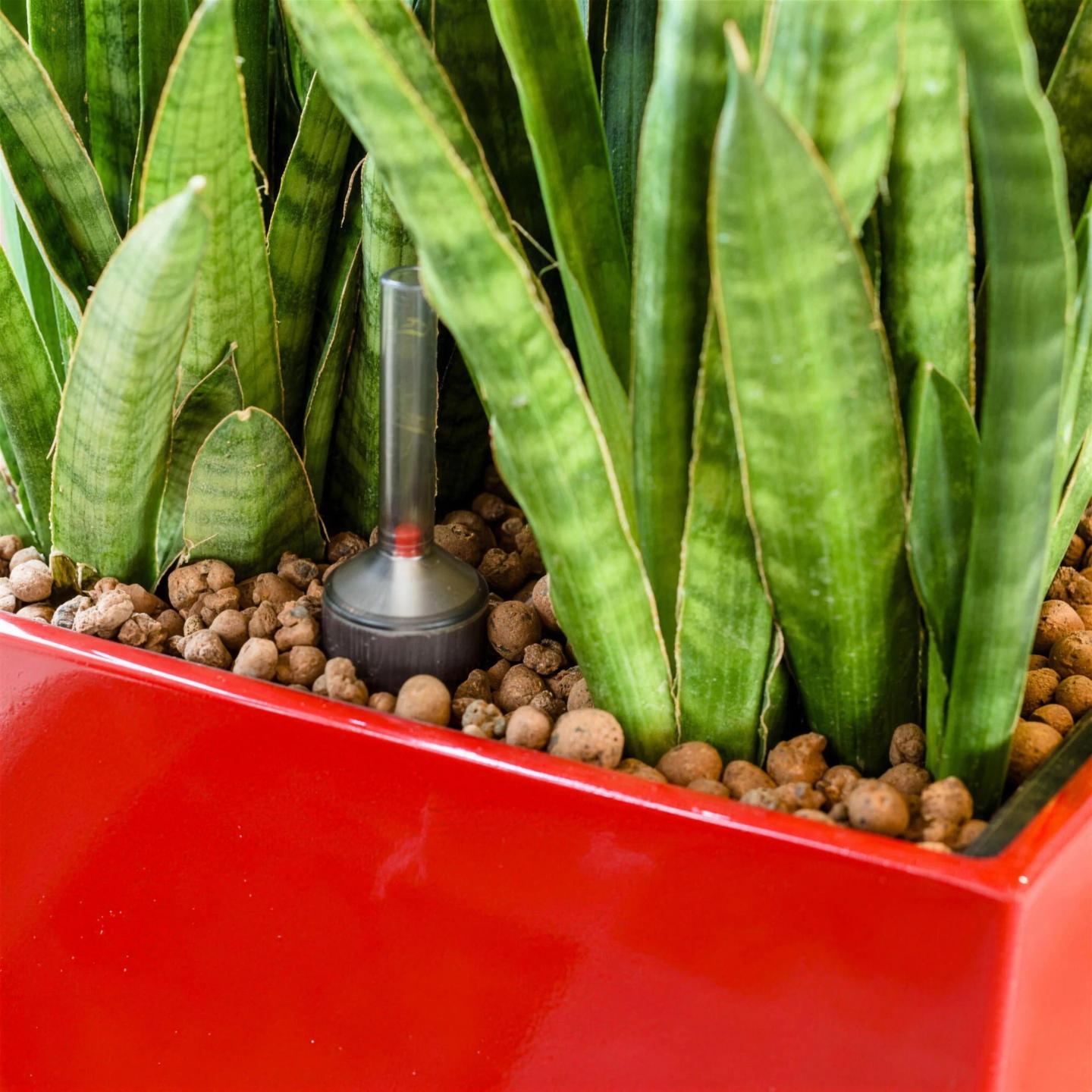
Baked clay pebbles
No soil, so no shrinkage and no pests.
A water level indicator
When the float drops to minimum, it is time for water.
Nutrient water at the bottom
At the bottom of the planter is a thin layer of nutrient water, which the roots find by themselves.
Strong plants
Grown especially for hydroculture. The plants adapt, for stable growth.
Soil or pebbles
Why Ed doesn’t use soil.
- In soil
- Shrinks as it dries, and can attract pests.
- On clay pebbles
- No shrinkage, no pests. Water once a month, and the water level indicator shows when.
Plants
From eye-catcher to desk plant.
Large plants for the entrance or the open-plan office, and smaller ones for the desk or the reception desk. Always in a pot or planter that suits your interior.
Areca and Amate
in Metallic Leaf
Ficus lyrata
in Grigio
Croton
in Polystone
Kentia
in a shiny pot
Ficus bambino
in Capi Rib
Aspidistra
in a custom planter
Mixed
in Bohemian Bamboo
Mixed
in a black window planter
Ed decides which plant goes where, spot by spot, by the light. Plenty of light or little, the plant has to thrive there.
Questions about hydroculture.
Question not listed? Call Ed on 06 48 65 93 37
What is hydroculture?
Plants on baked clay pebbles instead of soil. Water once a month, no shrinkage and no pests. A water level indicator shows when they need water.
How often do the plants need water?
Once a month. They need no daily care. With monthly maintenance, Ed does the watering.
What does the water level indicator do?
It shows how full the planter is. When the float drops to minimum, it is time for water. During maintenance Ed checks the indicators and replaces them if needed.
Why no soil?
Without soil there is no shrinkage and there are no pests. The plants stand on baked clay pebbles, with a thin layer of nutrient water at the bottom.
Which plants are available?
From large eye-catchers to smaller desk plants, grown especially for hydroculture. Ed decides which plant goes where, spot by spot, by the light.
Free site visit
Plants for your office? Ed visits free of charge.
- You tell Ed briefly what it is about.
- Ed calls you back himself to pick a time.
- A walk through the building together, then a quote per spot.